
MODERN SPINE SURGERY
The way spine surgery is done today is very different from even a decade ago.
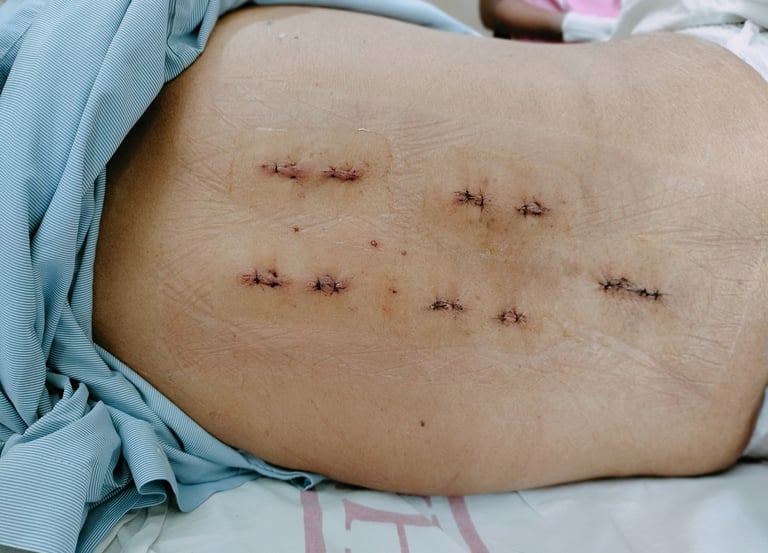
What used to require large incisions, longer hospital stays, and higher risk
can now often be done with precision, safety, and minimal disruption.
This is what modern spine care looks like.
Technology has completely changed how we understand, plan, and perform spine surgery.
WHY THIS MATTERS TO YOU
More accurate diagnosis
Safer surgical execution
Smaller incisions
Faster recovery
Better long-term outcomes
Every technology used is focused on one thing,
getting you back to normal life, faster and safer.
PRECISION THROUGH MAGNIFICATION
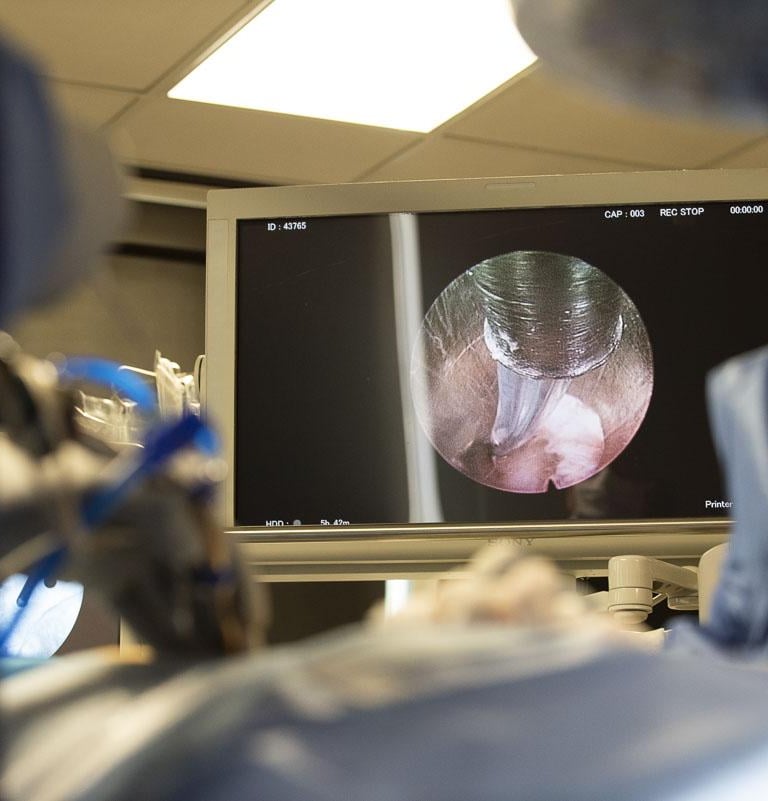
Modern spine surgery is performed with advanced magnification tools like:
Surgical loupes
Operative microscopes
Endoscopic systems
These allow the surgeon to clearly see even the smallest structures in the spine.
What this means for you:
Surgery through small keyhole incisions
Minimal damage to surrounding muscles
Higher safety and precision
See how this is used in Microdiscectomy
3D PLANNING WITH ADVANCED IMAGING
Traditional scans like X-rays, CT, and MRI give detailed images but they are still viewed on flat screens.
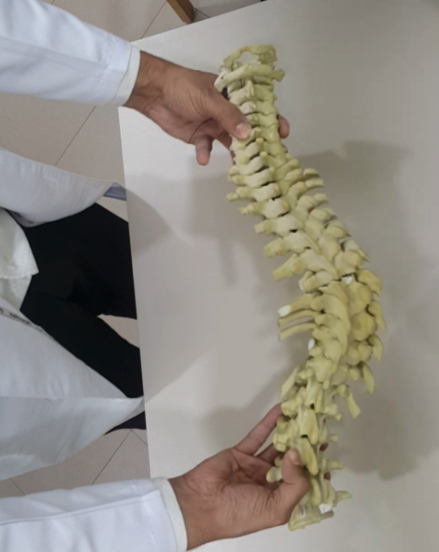
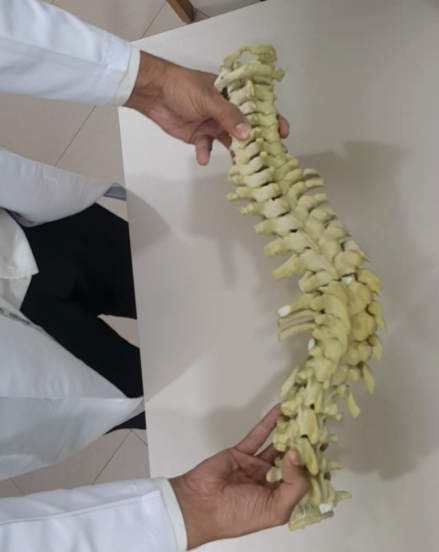
Especially useful in cases like scoliosis and deformity correction.
This allows:
Viewing the problem from every angle
Better understanding of complex deformities
More accurate surgical planning
With 3D printing technology, we can now create physical models of your spine.
Learn more about Deformity Correction Surgery
NAVIGATION & ROBOTIC PRECISION
Think of this like Google Maps for surgery.
Navigation systems guide the surgeon in real-time
for precise placement of implants and instruments.
Benefits:
Extremely high accuracy
Reduced risk of implant misplacement
Safer complex surgeries
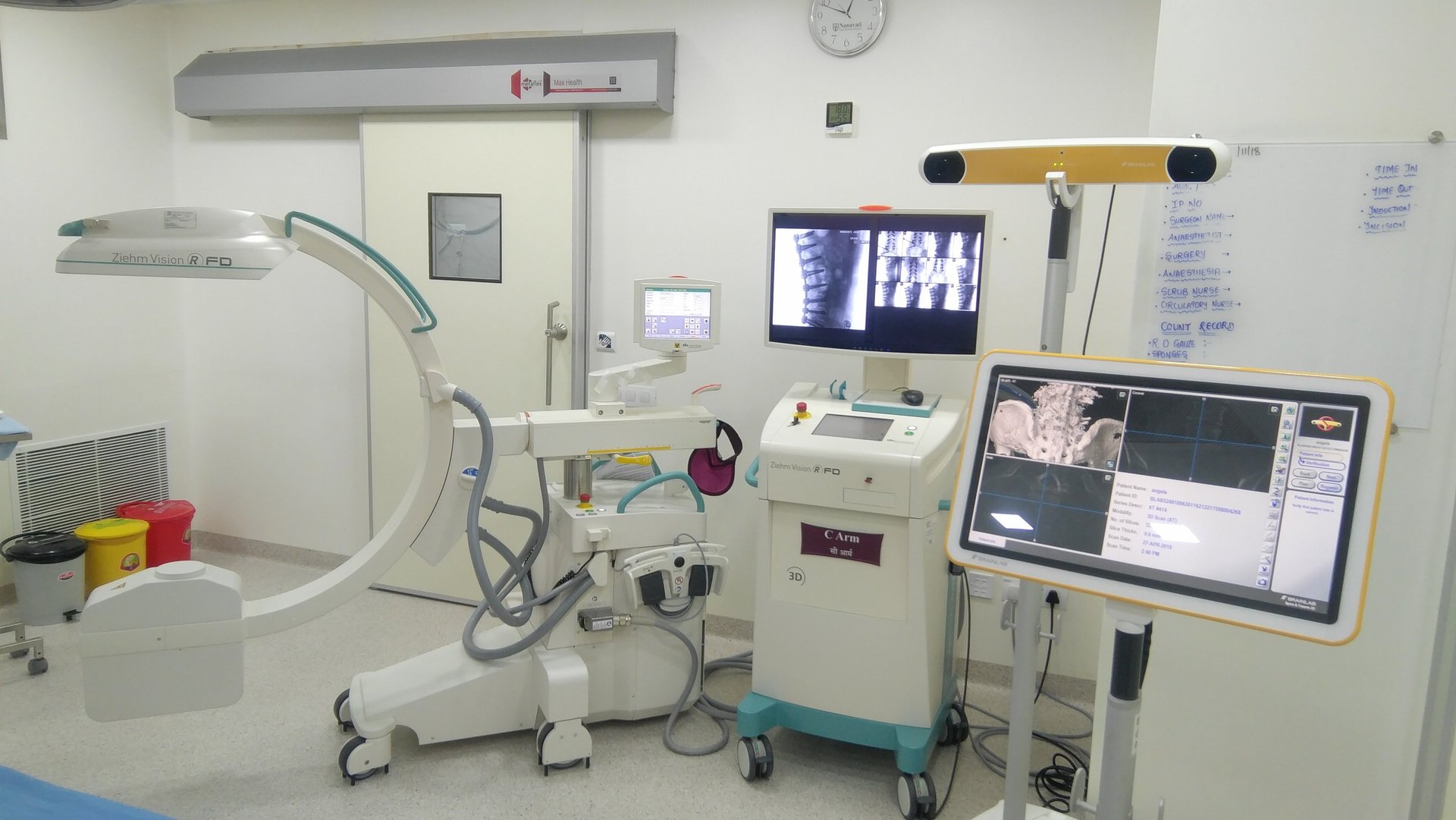
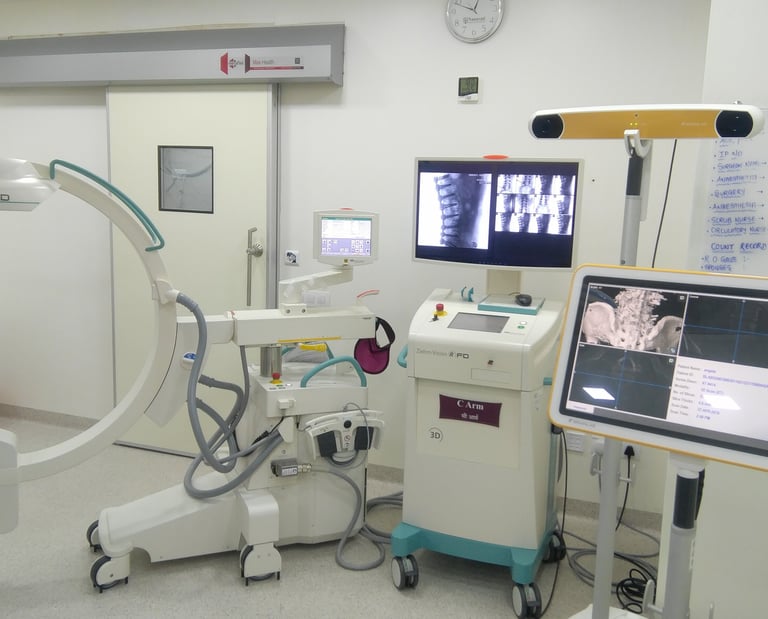
👉 Used in procedures like Navigated Lumbar Fusion and Tumor Surgery
REAL-TIME NERVE SAFETY (NEUROMONITORING)
During complex surgeries like scoliosis correction or tumor removal,
protecting nerves is critical.
Modern neuromonitoring systems:
Continuously track nerve function during surgery
Alert the surgeon instantly if there is any risk
Prevent neurological damage
Earlier, surgeries had to be paused for manual checks.
Now, monitoring is continuous and real-time.
👉 Essential in Deformity Correction and Tumor Surgery
ULTRASONIC BONE SCALPEL (PRECISION WITHOUT DAMAGE)
One of the most delicate steps in spine surgery
is removing bone near nerves and the spinal cord.
Traditional tools carried a risk to surrounding tissues.
The ultrasonic bone scalpel changes that.
It uses ultrasonic waves to cut only bone, while preserving soft tissues.
Why this matters:
Higher precision
Lower risk to nerves
Safer surgery overall
Earlier, surgeries had to be paused for manual checks.
Now, monitoring is continuous and real-time.
👉 Commonly used in Tumor Surgery
SAFER, FASTER, SMARTER SURGERY
Modern spine surgery is not just about new machines.
To deliver outcomes that are safer, faster, and more predictable.
It’s about combining:
Advanced technology
Surgical expertise
Patient-focused care
If you’ve been told you need spine surgery,
it’s worth understanding how it will be done.
The right technology and the right surgeon make all the difference.
Book a consultation and get a clear, modern treatment plan.
Advanced minimally invasive techniques
Internationally trained expertise
Care that continues beyond surgery
Dr. Amandeep Gujral is a leading Minimally Invasive Spine Surgeon in Mumbai.
He specializes in Minimally Invasive Spine Surgery (MISS) and treats conditions like slip disc, sciatica, neck pain, spine deformity, infections, and tumors.
Providing advanced, patient-focused spine care across Mumbai.
Board certified spine surgeon in Mumbai.
© 2026 Spinecareindia.com |
Dr. Amandeep Gujral & Spinecareindia.com.
All Rights Reserved.
The information on this website is for general educational purposes only and is not a substitute for professional medical advice.