
SCOLIOSIS & SPINE DEFORMITY TREATMENT
Noticing a bent posture or uneven shoulders?
It could be a spine deformity like scoliosis.
Spine deformities can range from mild posture changes to severe curvature affecting appearance, balance, and even breathing. Early evaluation helps guide the right treatment.
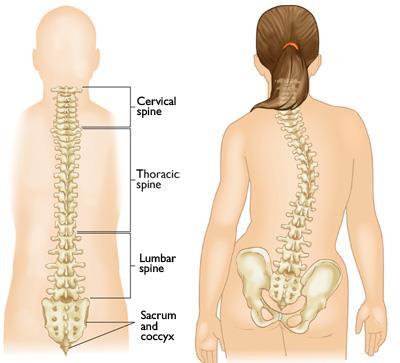
WHAT IS A NORMAL SPINE?
A normal spine is not completely straight.
It has natural curves in:
Cervical (neck)
Thoracic (chest)
Lumbar (lower back)
These curves help:
Maintain balance
Support body weight
Keep the head aligned over the hips
WHAT IS SCOLIOSIS / SPINE DEFORMITY?
When these curves become exaggerated or abnormal, it leads to spine deformity.
This can cause:
Bent or crooked spine
Uneven shoulders or hips
Visible hump on the back
Deformities may be mild or severe depending on progression.

CAUSES OF SCOLIOSIS & DEFORMITY
Congenital / Developmental
Present in early childhood (2–4 years)Idiopathic
Common in children aged 6–14 years
Cause often unknownDegenerative
Seen in elderly due to aging and weakening of bonesPost-traumatic / Tumor-related
After injury or spinal tumors
SYMPTOMS & SIGNS
Bent or tilted posture
Uneven shoulders or hips
Visible hump on the back
Leaning to one side while standing
Cosmetic deformity
In advanced cases:
Breathing difficulty (lung compression)
Reduced appetite (in elderly)
Fatigue or tiredness
Rarely back pain
Rare neurological symptoms (leg weakness)
DIAGNOSIS
Tests include:
X-rays
First and most important test to assess curvatureSpecial X-rays
(Scanograms, bending films) to assess flexibilityCT Scan
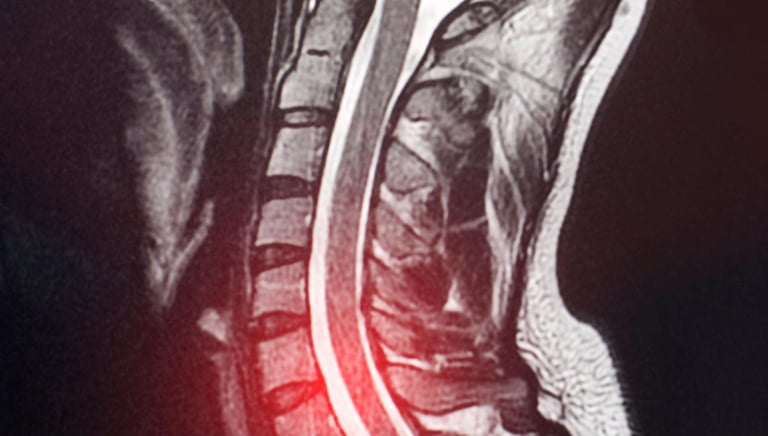
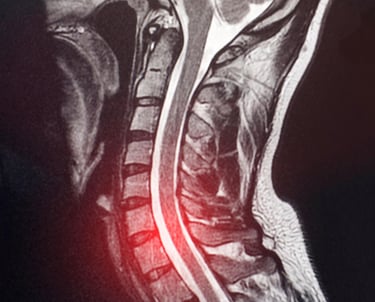
Detailed 3D understanding of deformityMRI Scan
To check spinal cord involvementDEXA Scan
For bone strength (in elderly patients)SSEP / EMG
Nerve function tests (pre-surgery evaluation)
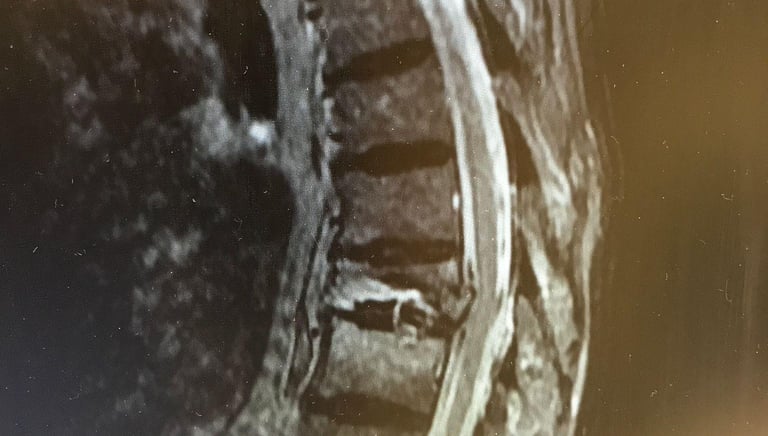
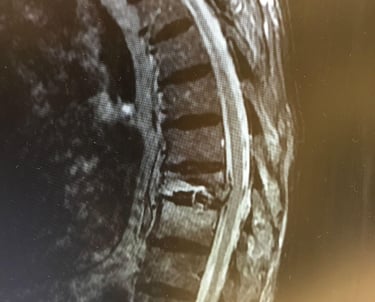
TREATMENT OF SCOLIOSIS
When is treatment needed?
If the deformity is:
Progressive
Structurally significant
Affecting posture or function
SURGICAL CORRECTION
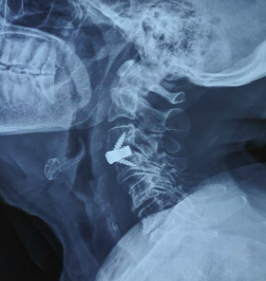
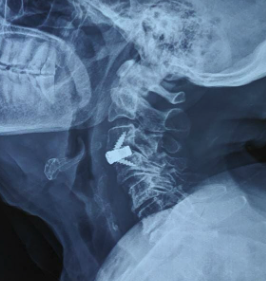
Correction & Fusion Surgery
Spine is realigned using rods and screws
Deformity is corrected
Vertebrae are fused for stability
3D Printing
Custom spine models for surgical planning
Improves accuracy in complex deformities
Intraoperative Neuromonitoring
Continuous nerve monitoring during surgery
Reduces risk of neurological injury
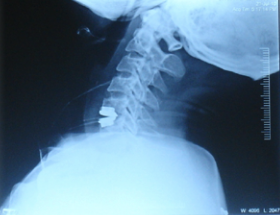
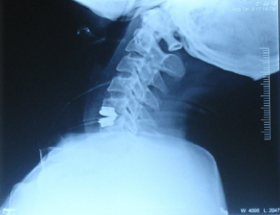
RISKS OF SURGERY
These are major surgeries requiring careful planning.
Possible risks include:
Neurological injury (rare)
Infection
Implant-related issues
Non-union (pseudoarthrosis)
Junctional deformity
Modern techniques significantly reduce these risks.
RECOVERY AFTER SURGERY
Hospital Stay
Typically 5–6 days
Mobilization
Walking starts next day
At least 10 minutes, 3 times daily
POST-SURGERY PRECAUTIONS
Keep wound dry for 10 days
Avoid for 3–6 weeks:
Forward bending
Sitting on the floor
Lifting heavy weights (8–10 kg)
You can:
Walk freely
Travel
Gradually return to work
WHEN SHOULD YOU SEE A SPINE SPECIALIST?
Visible spine curvature
Uneven shoulders or hips
Child with posture changes
Progressive deformity
Early diagnosis helps avoid complex surgery later.
Spine deformity is not just cosmetic, it can affect long-term health.
Early treatment leads to better outcomes.
Book a consultation for expert scoliosis evaluation and treatment.
Advanced deformity correction in Mumbai
Global techniques and precision planning
Complete care from diagnosis to recovery
Frequently asked questions
At what age does scoliosis usually occur?
Children (6–14 years) – most common (idiopathic scoliosis)
Early childhood (2–4 years) – congenital cases
Adults/elderly – due to degeneration
How do I know if my child has scoliosis?
Look for:
Uneven shoulders
One side of the back appearing higher
Leaning to one side
Visible hump when bending forward
Does scoliosis always need surgery?
No.
Mild cases may only need observation and monitoring
Surgery is recommended only if the curve is progressive or severe
Can scoliosis get worse over time?
Yes, especially during growth years.
Curves can progress rapidly in children
In adults, degeneration may worsen deformity
Regular follow-up is important.
Is scoliosis only a cosmetic problem?
No, While it affects appearance, severe cases can also cause:
Breathing difficulty
Fatigue
Imbalance
Rarely nerve problems
Is scoliosis surgery safe?
Yes, with modern techniques it is much safer.
Use of 3D planning and neuromonitoring improves precision
Risks are minimized but not completely eliminated
STILL HAVE QUESTIONS ABOUT SCOLIOSIS?
Every spine is different.
Book a consultation for a detailed evaluation and personalized treatment plan.
Early screening helps prevent progression.
Can scoliosis be prevented?
Not always, especially in idiopathic cases.
However:
Early detection
Regular monitoring
Timely treatment
can prevent progression and complications.
Dr. Amandeep Gujral is a leading Minimally Invasive Spine Surgeon in Mumbai.
He specializes in Minimally Invasive Spine Surgery (MISS) and treats conditions like slip disc, sciatica, neck pain, spine deformity, infections, and tumors.
Providing advanced, patient-focused spine care across Mumbai.
Board certified spine surgeon in Mumbai.
© 2026 Spinecareindia.com |
Dr. Amandeep Gujral & Spinecareindia.com.
All Rights Reserved.
The information on this website is for general educational purposes only and is not a substitute for professional medical advice.