
SPINE BIOPSY
(ACCURATE DIAGNOSIS FOR SPINE INFECTION & TUMOR)
When scans show an abnormality, the most important step is knowing exactly what it is.
A spine biopsy helps identify whether the problem is:
Infection (like tuberculosis or bacterial)
Tumor (benign or malignant)
Inflammation or other rare conditions
Not sure what’s causing your spine problem?
This ensures the right treatment starts immediately.
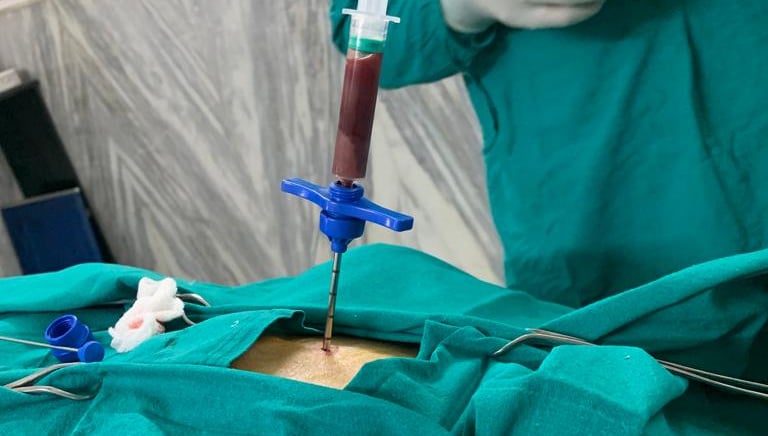
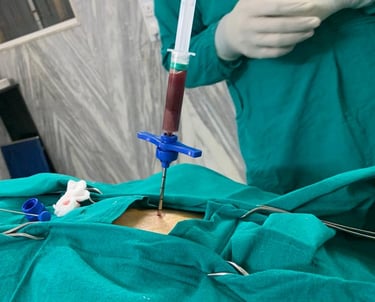
WHAT IS A SPINE BIOPSY?
A spine biopsy is a minimally invasive diagnostic procedure where a small sample of tissue is taken from the affected area of the spine.
This sample is then tested to:
Identify infection-causing organisms
Confirm tumor type
Guide exact treatment (antibiotics, surgery, oncology care)
WHEN IS A SPINE BIOPSY REQUIRED?
A biopsy is recommended when:
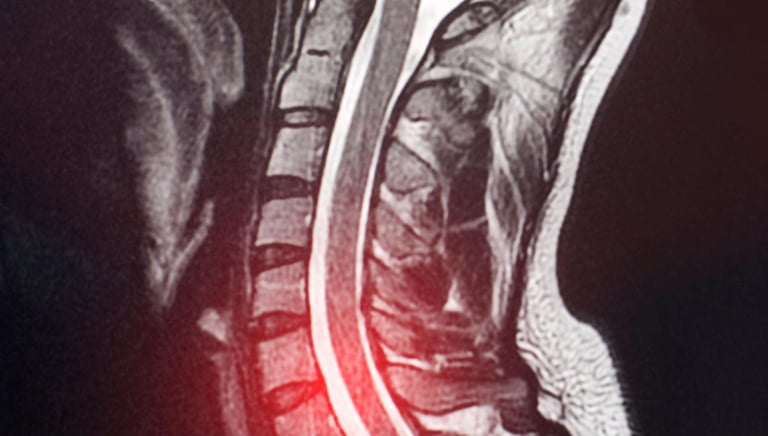
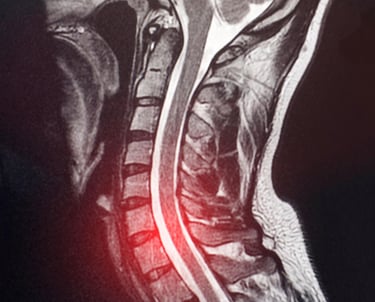
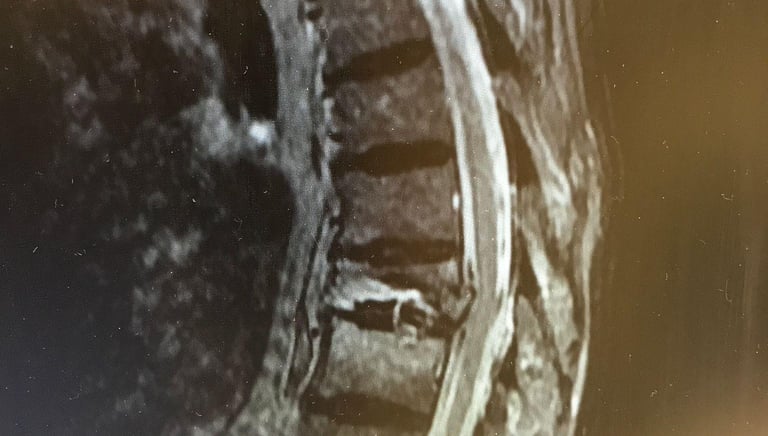
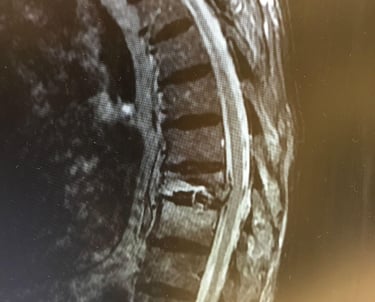
MRI shows unclear or suspicious lesions
Infection is suspected but not confirmed
Tumor needs to be diagnosed or classified
Symptoms are severe but diagnosis is uncertain
👉 This is the decision-making step before starting major treatment.


SYMPTOMS THAT MAY NEED A BIOPSY
Persistent back pain not improving
Pain at night or at rest
Fever, weight loss, loss of appetite
Weakness or numbness in limbs
History of cancer with new spine pain
HOW IS A SPINE BIOPSY PERFORMED?
Done using CT scan or fluoroscopic guidance
A fine needle is inserted into the affected area
Tissue or fluid sample is collected
Procedure is done under local anesthesia
Key advantages:
No major surgery required
Minimal pain
High diagnostic accuracy
IS SPINE BIOPSY SAFE?
Yes, it is a safe and routine procedure when performed by experienced specialists.
Minimal risk of complications
No large incisions
Quick recovery
WHAT HAPPENS AFTER THE BIOPSY?
The sample is sent for:
Microbiology (infection detection)
Histopathology (tumor analysis)
Culture & sensitivity (to guide antibiotics)
Results help decide:
Infection → targeted antibiotics or anti-TB treatment
Tumor → surgery, oncology, or observation
What happens after diagnosis?
This is where treatment becomes precise:
👉 If it’s an infection → treated medically with antibiotics
👉 If it’s a tumor → evaluated for surgery or oncology care
Explore related treatments:
WHY EARLY BIOPSY MATTERS
Delaying diagnosis can lead to:
Wrong treatment
Progression of disease
Nerve damage or paralysis
A biopsy ensures you’re not guessing, you’re treating the exact problem.
WHEN SHOULD YOU CONSIDER A BIOPSY?
MRI shows abnormal lesion
Infection suspected but not confirmed
Tumor needs classification
Persistent unexplained pain
If your reports are unclear or symptoms are not improving, don’t wait.
The right diagnosis changes everything.
Book a consultation for expert evaluation and biopsy planning.
Accurate diagnosis with guided biopsy
Integrated care for infection and tumors
Advanced spine care in Mumbai
Frequently asked questions
Does a biopsy mean cancer?
No. A biopsy does not mean you have cancer. It is done to identify the cause, which could be:
Infection (tuberculosis, bacterial, fungal)
Tumor (benign or malignant)
Other inflammatory conditions
It is simply a diagnostic tool, not a diagnosis.
What tests or preparations are required before a spine biopsy?
Before a spine biopsy, a few basic checks are done to ensure the procedure is safe and accurate.
Common requirements include:
MRI or CT scan reports
To identify the exact location for the biopsyBlood tests
CBC (Complete Blood Count)
Clotting profile (to ensure normal bleeding control)
Infection markers if required
Medication review
Blood thinners may need to be stopped temporarily
Inform your doctor about all ongoing medications
Fasting (if advised)
In some cases, short fasting may be required depending on sedation needs
How is a spine biopsy performed?
Done under CT scan or X-ray (fluoroscopy) guidance
A fine needle is inserted into the affected area
Tissue sample is collected
A small dressing is applied
Do I need to be admitted for a biopsy?
No.
It is an OPD / day-care procedure
No overnight hospital stay required
You can go home the same day
What precautions are needed after the biopsy?
Very minimal.
You can continue normal daily activities
Keep the area clean and dry
Follow doctor’s advice if any specific instruction is given
What happens after the biopsy results?
This is the most important step.
If infection → targeted antibiotics or anti-TB treatment
If tumor → further evaluation and treatment planning
If benign → monitoring or minimal treatment
The biopsy ensures you get the right treatment, not trial-and-error care.
STILL CONFUSED ABOUT YOUR REPORTS?
If your MRI or diagnosis is unclear, a biopsy can give you complete clarity.
Book a consultation to understand if you need a spine biopsy.
No stitches are required, and the wound heals within 3–4 days.
How painful is a spine biopsy?
The procedure is almost painless.
Local anesthesia numbs the area
You may feel a slight pinch during injection
No pain is felt during tissue removal
Dr. Amandeep Gujral is a leading Minimally Invasive Spine Surgeon in Mumbai.
He specializes in Minimally Invasive Spine Surgery (MISS) and treats conditions like slip disc, sciatica, neck pain, spine deformity, infections, and tumors.
Providing advanced, patient-focused spine care across Mumbai.
Board certified spine surgeon in Mumbai.
© 2026 Spinecareindia.com |
Dr. Amandeep Gujral & Spinecareindia.com.
All Rights Reserved.
The information on this website is for general educational purposes only and is not a substitute for professional medical advice.